Back to News
UOA doubles down on Vietnam amid surge in office demand
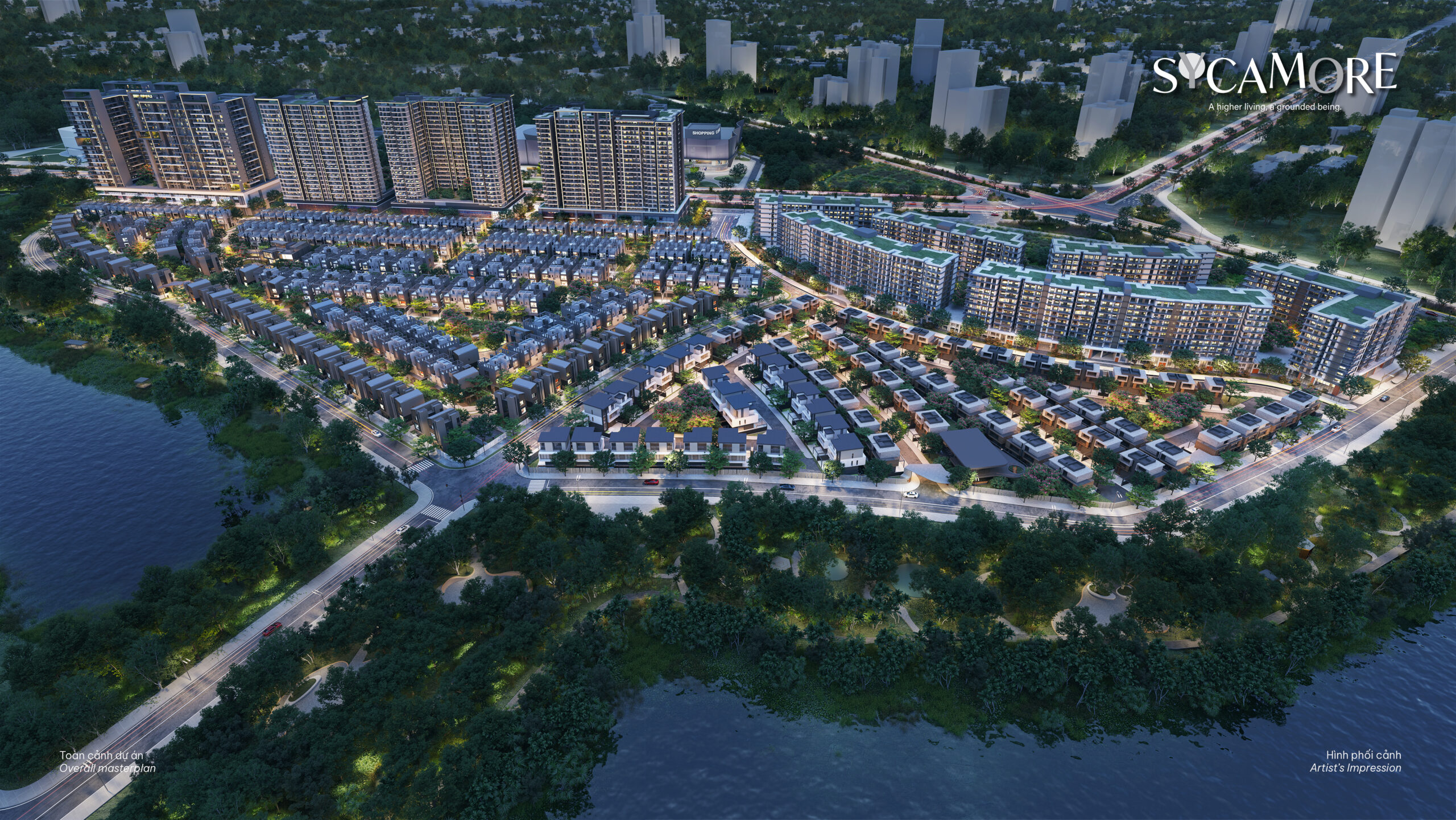
United Overseas Australia (UOA), dual-listed on the Australian Securities Exchange and the Singapore Exchange, is deepening its bet on Vietnam’s growth story with the acquisition of a prime CBD site in Ho Chi Minh City (HCMC) for US$68 million ($88.9 million) in late September.
The deal, completed through the full acquisition of VIAS Hong Ngoc Bao Joint Stock Company, gives UOA a foothold in HCMC’s most coveted commercial district — prime District 1.
The developer plans to invest a total of US$120 million to transform the 21,528 sq ft site into Parc Tower, a 215,280 sq ft green-certified office development. The name Parc Tower was inspired by its location directly opposite the park. With its prime CBD address and distinctive setting, the project is set to become UOA’s flagship development in Vietnam. Construction is slated to begin in 4Q2025, with completion targeted for 2Q2028.
This marks UOA’s third office project in Vietnam’s largest metropolis, following its first, UOA Tower, and Millennial Tower in the Phu My Hung district.
“I’m very confident about Vietnam simply because of the lack of supply,” says Dickson Kong, head of investment at UOA, referring to the city’s Grade-A office segment.
According to Savills Research in a Nov 4 report, HCMC’s total office stock reached 2.96 million sq m (31.86 million sq ft) of net lettable area (NLA) as at 3Q2025. The pipeline is projected to expand by another 234,000 sq m (over 2.5 million sq ft) by 2028. However, new supply will be dominated by Grade-B developments, followed by Grades C and A.
Limited Grade-A office supply is expected to persist, while demand remains driven by ICT (information and communications technology) and FIRE (finance, insurance and real estate) tenants, notes Tu Thi Hong An, senior director of commercial leasing at Savills HCMC. “These occupiers are seeking larger, more efficient floor plates, and the constrained supply will continue to support rental stability.”
In Malaysia, UOA ranks among the country’s largest office landlords, with NLA exceeding 3.8 million sq ft across Kuala Lumpur (KL) City and Selangor. The group’s extensive portfolio is managed through its Malaysian-listed entities, UOA Development and UOA REIT.
Knight Frank Malaysia estimates that as of 2Q2025, KL City had 60.63 million sq ft of office space, while Selangor had 31.7 million sq ft — a combined 119.33 million sq ft within the Klang Valley, which has a population of 8.8 million.
“HCMC has nearly twice KL’s population — over 14 million — yet less than a third of its office space,” Kong points out. “We see that as a huge pent-up demand for quality office supply, which is why we’re so upbeat about the economy.”
While UOA’s new office site sits in District 1, HCMC’s traditional CBD, part of the district will be integrated into the International Financial Centre (IFC) in the Thu Thiem New Urban Area — a master-planned district envisioned to anchor the city’s ambition to become a regional financial hub.
For UOA, the imbalance between demand and limited Grade-A supply reinforces its long-term strategy in Vietnam — and, in fact, gives the group an edge. “Office developments are very capital-intensive,” Kong says. “That allows us to play to our strengths as one of the biggest office landlords in Malaysia.”
From young banker to developer-investor in Vietnam
Kong’s confidence in Vietnam is built on years of first-hand experience. His relationship with HCMC began more than a decade ago — long before UOA’s latest expansion.
It was 2010. Kong had just spent several years as an investment banker at Merrill Lynch. He was weighing two job offers in Singapore at the time — one from another bank and the other for an investment role with an Indonesian conglomerate — when his father asked him to visit Vietnam to explore investment opportunities there.
Kong ended up spending the next two years in HCMC. “I was a young punk then — single and living the expat lifestyle,” he recalls. “Looking back, I was also a bit inexperienced when it came to identifying deals.”
However, it turned out to be an eye-opening learning experience. Vietnam’s economy was reeling after the state-owned shipbuilder Vinashin had defaulted on a US$600 million syndicated loan in 2010, followed by a 17% depreciation of the dong in 2011.
To combat high inflation in 2011, the government raised interest rates sharply — the World Bank reported average lending rates of 15.8% that year, while some saw commercial lending rates as high as 18% to 25% in HCMC and other major areas.
“With interest rates at 25%, not much was happening,” recalls Kong. “Back then, many people told me there wouldn’t be any distressed sales, but I didn’t believe them.”
As a former investment banker, Kong figured it was a great time to pounce on fire-sale deals. “I thought if I had cash, I could do deals,” Kong says. However, these deals did not surface.
In fact, over the past 15 years, despite market fluctuations and economic cycles, he has not encountered any distressed assets. “Even during Covid, I was waiting for opportunities, hoping we could snap up something cheap — but it didn’t happen,” he notes.
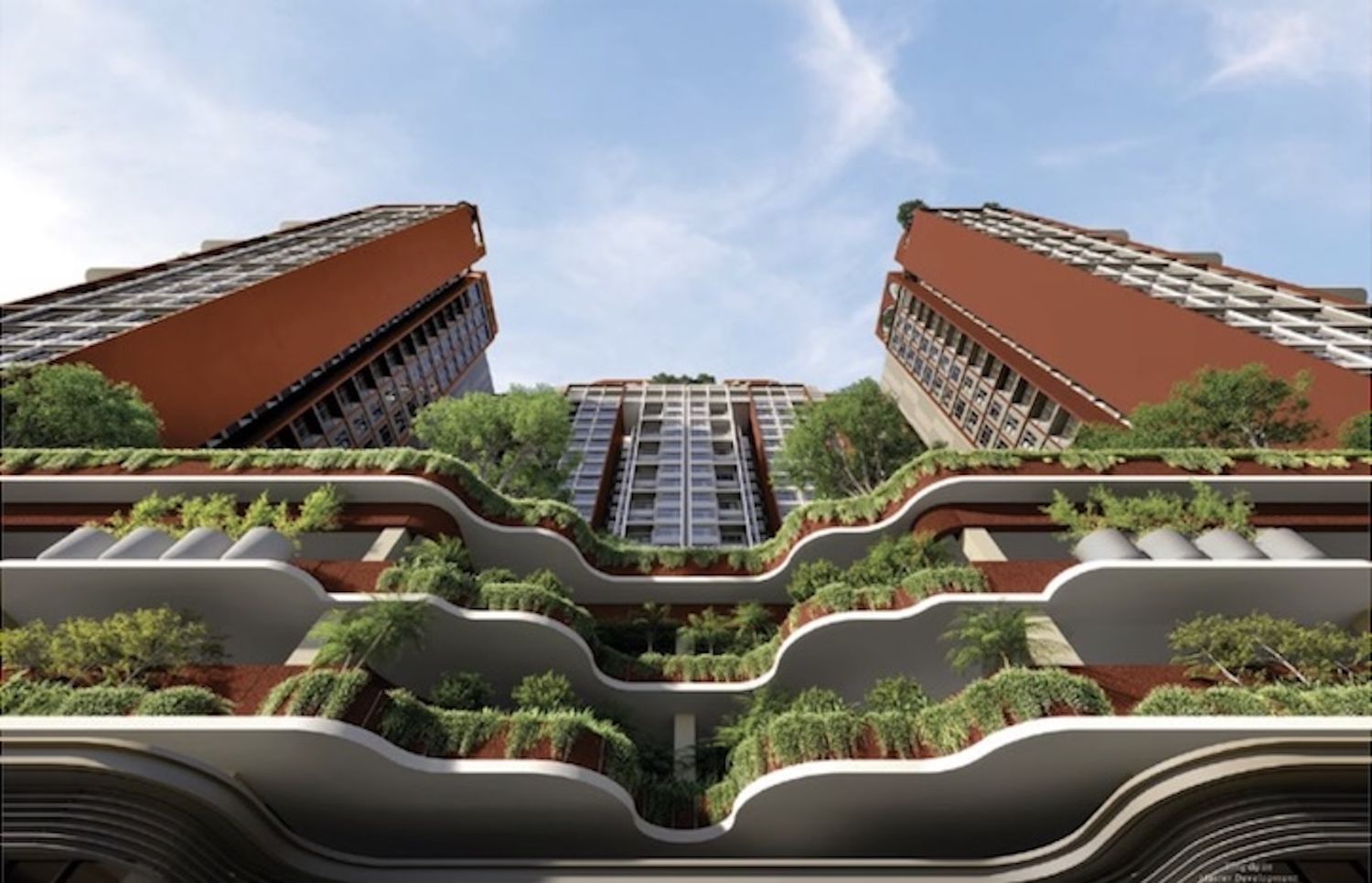
With the first phase of the 3,500-unit Sycamore now more than 90% sold, and the second phase 100% sold, Orchard Heights (pictured) is the third phase of the joint venture project between CapitaLand Development and UOA in HCMC (Artist’s impression: CapitaLand Development & UOA)
A long-term conviction built on experience
UOA’s ventures in Vietnam now span both office and residential developments. Its first residential project in HCMC was a joint venture with CapitaLand Development, the development arm of CapitaLand Group. In December 2023, the partners announced the US$247 million, 3,500-unit Sycamore residential project in Binh Duong Ward, HCMC.
To date, more than 90% of The Orchard, the first phase of Sycamore with 368 landed homes, have been sold. The second phase, Orchard Hill, saw all 774 units taken up. The first phase is scheduled for handover by 4Q2025 and the second by 4Q2026.
“We concluded the deal and ‘shook hands’ with CapitaLand over a Zoom call — it was during Covid,” Kong recalls. He says UOA was comfortable doing so even without visiting the site in person, “because we already know the city very well, and we knew exactly where the site was”.
Kong is also optimistic about the residential market in HCMC. However, he feels that it is harder for foreigners to enter the sector, given the dominance of the domestic developers.
Savills’ report showed that in 3Q2025, primary housing stock decreased q-o-q but surged y-o-y to 5,200 units. Developers continued to focus on the mid-tier segment, with new supply reaching 2,000 units from the launch of one new project and five subsequent phases in 3Q2025.
There are still restrictions on foreign ownership, particularly in the housing sector. Foreigners can buy only a 50-year lease, whereas locals own freehold tenure in the same project. There is also a 30% quota for foreign buyers in each residential development, who must pay a 10% premium and are not eligible for a mortgage.
In the resale market, foreign owners may sell to either foreigners or locals — a foreign buyer purchases the remaining lease, while a local buyer can convert the property to freehold.
In the long term, however, Kong says Vietnam remains an attractive real estate market.
UOA was founded in 1987 by Kong Chong Soon, managing director, now 86, and Kong Pak Lim, chairman, now 74 (Photo: UOA)
Family legacy and steady stewardship
Kong’s conviction in Vietnam reflects a broader ethos shaped by his family’s decades in property development. His father, Kong Chong Soon, co-founded UOA in 1987 with long-time partner Kong Pak Lim (not related).
Over the past 38 years, they have built UOA into one of Kuala Lumpur’s leading developers, with projects spanning residential, commercial, hospitality, and healthcare segments.
Today, the elder Kong, 86, still flies to Kuala Lumpur for business and continues to serve as managing director of UOA. Pak Lim, 74, is the group’s chairman and a non-independent director.
Vietnam’s continued appeal
Vietnam’s economy has remained resilient. GDP grew 7.9% in the first nine months of 2025 — the second-highest nine-month rate from 2011 to 2025, says Savills Research.
Trade surplus reached US$16.8 billion, with exports up 16% y-o-y to US$349 billion and imports up 19% to US$332 billion. The US is Vietnam’s largest export market (US$113 billion), while China is its top import partner (US$134 billion).
Total registered foreign direct investment (FDI) rose 15% y-o-y to US$28.5 billion in 3Q2025, with newly registered capital of US$12.4 billion across 2,926 projects. Manufacturing (59%) and real estate (21%) were the dominant sectors, while Singapore remained the largest investor (28%), followed by China (23%) and Hong Kong (9%), according to Savills.
In October, FTSE Russell upgraded Vietnam from frontier to emerging-market status. Instead of the volatility typical of frontier markets, Kong observes that Vietnam’s growth has been more of “a staircase effect — it goes up, then plateaus; goes up, then plateaus; then up again — and that’s been true for the past 15 years”.
However, having travelled frequently to Vietnam since his two-year stint there, Kong is now able to speak Vietnamese fluently too. “Vietnam has become a safe place to live,” Kong says. “Even for families with school-age children, there are many good international schools in HCMC.”
Hence, when it comes to investments, he adds, “HCMC feels most comfortable to us”.
Share it!
[DISPLAY_ULTIMATE_SOCIAL_ICONS]